Common Signs of Rodents in Your Roof
Rodent infestations in Sydney roofs are common, particularly in older homes and during cooler months. Here's how to identify if you have unwanted guests overhead.
1. Scratching and Scurrying Sounds
The most common sign is noise, particularly at night when rodents are most active.
- Rats: Fast, light scurrying sounds throughout the night
- Mice: Very light scratching, often sounds like something brushing against surfaces
- Possums: Heavy thumping, mainly at dusk and dawn (protected species - different removal process)
2. Droppings
Rodent droppings are a definitive sign of infestation:
- Rat droppings: 10-15mm, dark, pointed at ends, found in concentrated areas
- Mouse droppings: 3-6mm, dark, pointed, scattered randomly
- Fresh vs old: Fresh droppings are dark and shiny; old ones are dry and grey
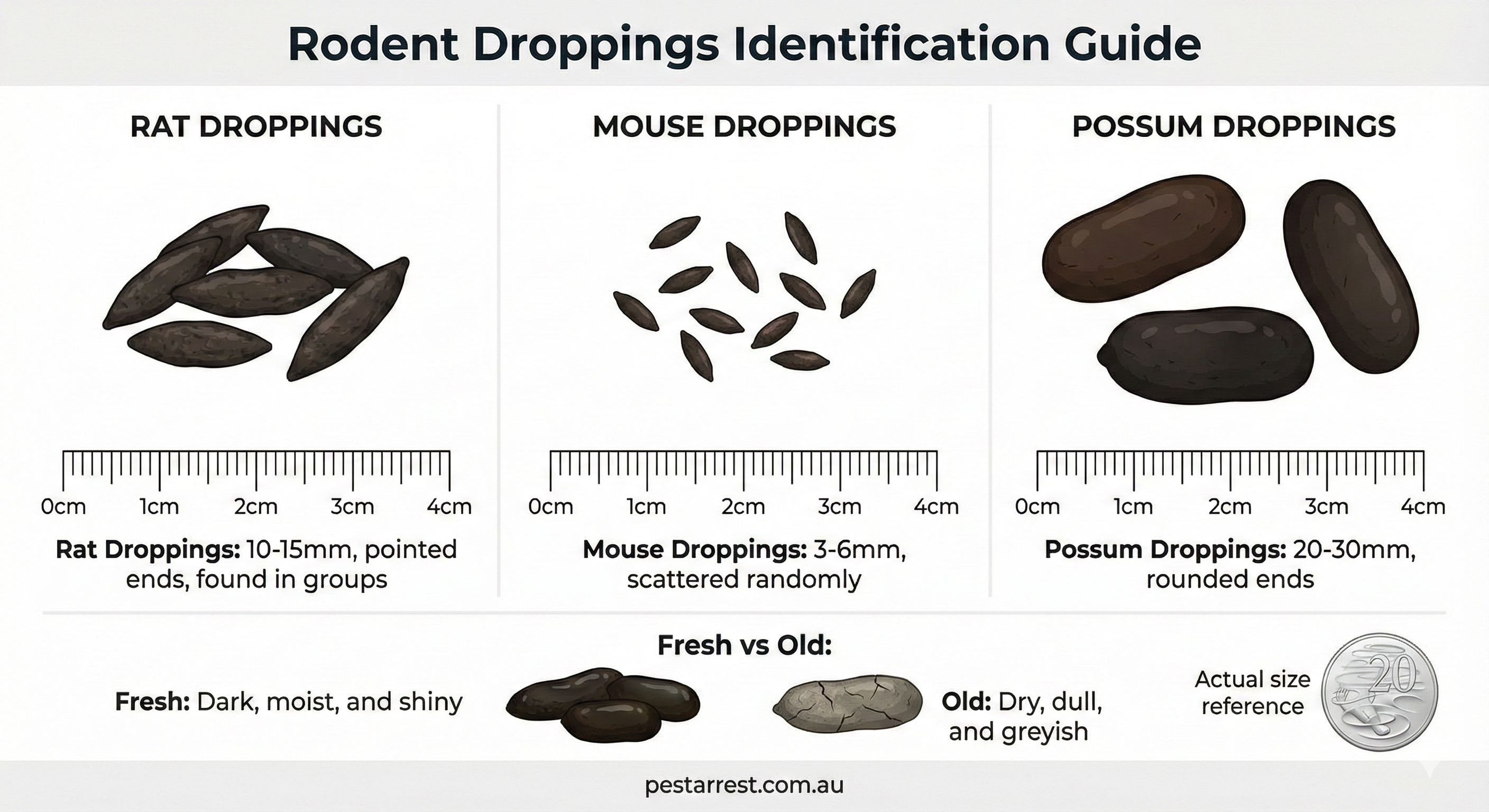
Check your roof void (if safely accessible), garage, and behind appliances.
3. Gnaw Marks
Rodents must constantly gnaw to keep their teeth worn down. Look for:
- Chewed edges on stored boxes and materials
- Gnawed timber, particularly around entry points
- Damaged electrical wiring (serious fire risk)
- Chewed PVC pipes
4. Grease Marks (Rub Marks)
Rodents follow the same paths repeatedly, leaving dark grease marks from their oily fur. Look for these along:
- Walls and baseboards
- Around entry holes
- Along pipes and cables
5. Nests and Nesting Materials
Rodents build nests from shredded materials including:
- Insulation (often damaged or displaced)
- Paper and cardboard
- Fabric and soft materials
6. Unusual Pet Behaviour
Dogs and cats often detect rodents before humans. Watch for:
- Pets staring at walls or ceilings
- Scratching at particular areas
- Unusual alertness at night
Rats vs Possums: Key Differences
This distinction is important because possums are protected wildlife in NSW and require different handling. Possum removal must be done by a licensed operator — it's illegal to harm, trap, or relocate possums without proper authorisation.
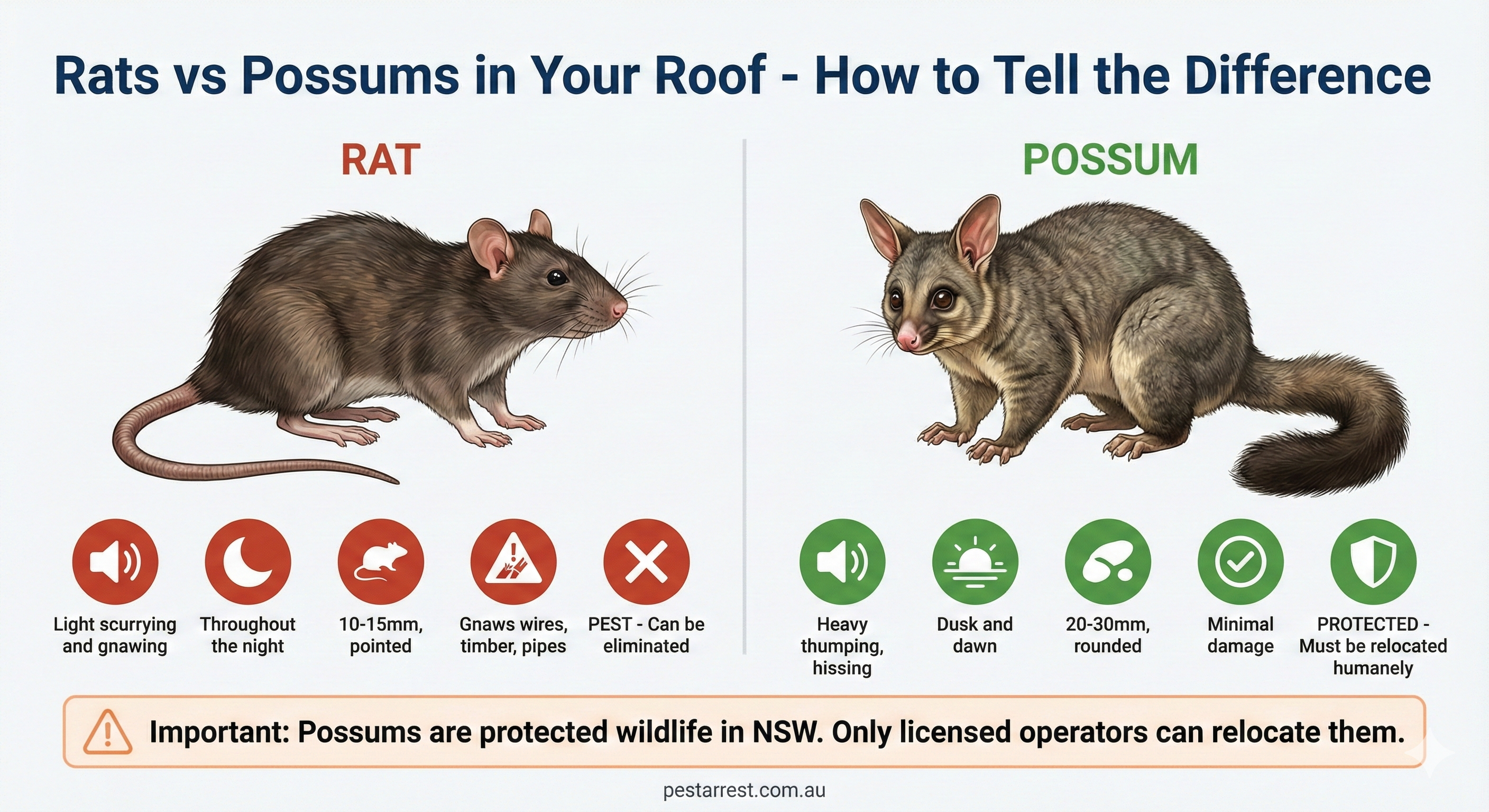
| Characteristic | Rats | Possums |
|---|---|---|
| Sound | Light scurrying, gnawing | Heavy thumping, hissing |
| Activity Time | Throughout night | Dusk and dawn mainly |
| Droppings | 10-15mm, pointed | 20-30mm, rounded |
| Urine Smell | Strong ammonia | Less pungent |
| Damage | Gnawing on everything | Minimal damage |
| Legal Status | Pest (can be killed) | Protected wildlife |
Health Risks of Roof Rodents
Rodent infestations pose genuine health risks that shouldn't be ignored:
Disease Transmission
- Leptospirosis: Spread through contaminated urine
- Salmonella: From droppings contaminating food prep areas
- Hantavirus: Transmitted through dried droppings and urine
- Rat-bite fever: From bites or scratches
Other Hazards
- Fire risk: Gnawed electrical wires cause house fires
- Allergies: Rodent dander and droppings trigger allergic reactions
- Contaminated insulation: May need replacement after heavy infestation
Immediate DIY Steps
While professional rodent control treatment is recommended, you can take immediate action:
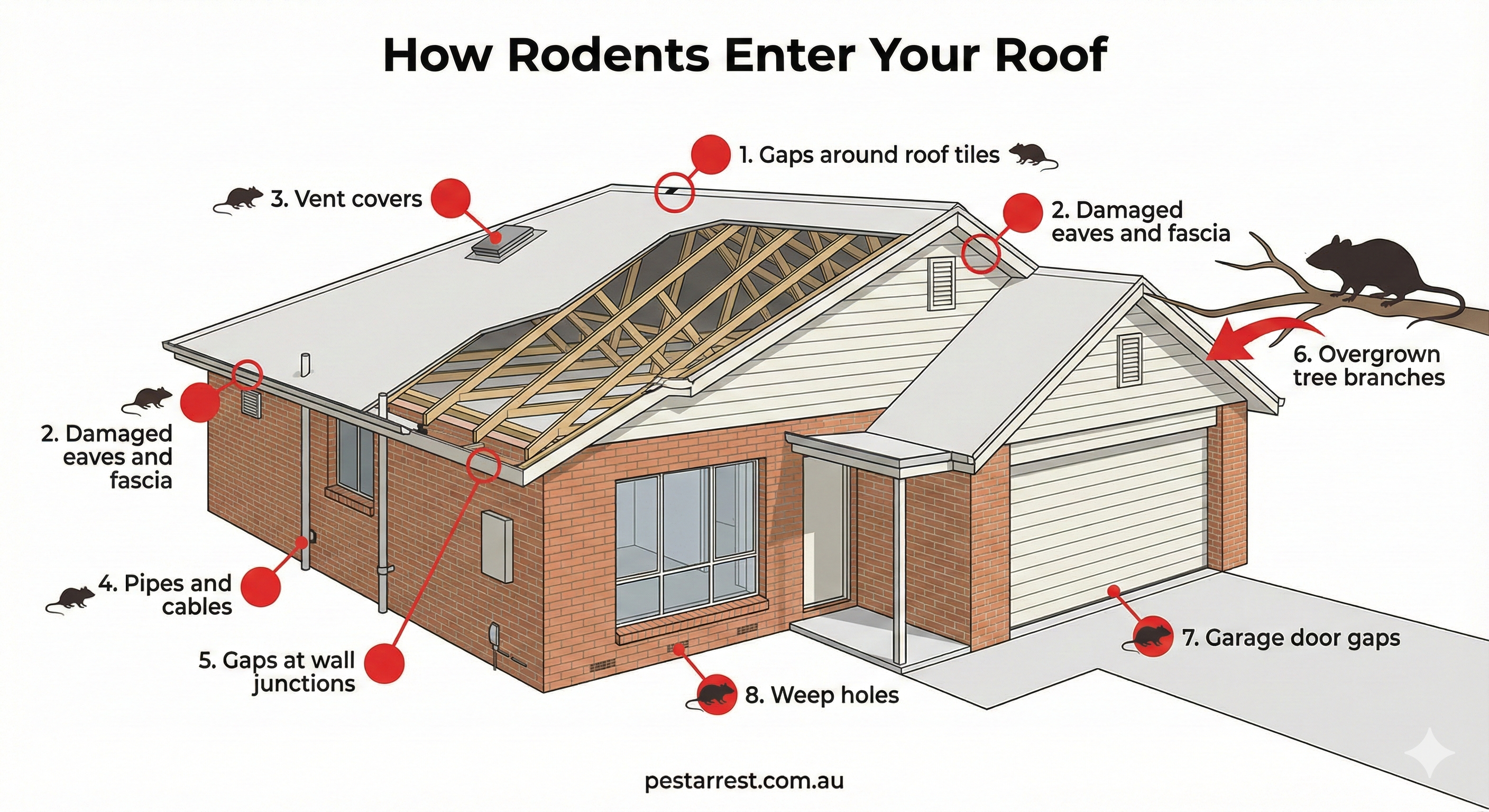
1. Identify Entry Points
Carefully inspect your property for gaps:
- Check where pipes and cables enter the building
- Inspect eaves and fascia boards
- Look for gaps around roof tiles
- Examine vent covers
2. Remove Food Sources
- Store all food in sealed containers
- Don't leave pet food out overnight
- Secure garbage bins
- Clean up fallen fruit from trees
3. Reduce Habitat
- Trim tree branches near the roof (2m clearance recommended)
- Clear garden debris and woodpiles
- Remove dense vegetation against walls
Professional Solutions
An EPA-licensed pest controller will typically:
Inspection
- Identify rodent species and activity level
- Locate entry points and harbourage areas
- Assess extent of damage
Treatment Options
- Baiting programs: Secure bait stations in roof void and external areas
- Trapping: For sensitive areas or quick knockdown
- Exclusion work: Sealing entry points to prevent re-entry
Expected Timeline
- Initial knockdown: 1-2 weeks
- Complete elimination: 2-4 weeks
- Follow-up visits: 2-3 visits over 4-6 weeks
Preventing Future Infestations
After treatment, maintain a rodent-free home:
- Schedule annual inspections with a licensed pest controller
- Maintain tree trimming (quarterly)
- Regular exterior inspections for new entry points
- Keep garage and storage areas tidy
- Continue food hygiene practices
Hearing Noises in Your Roof?
Get a professional inspection from an EPA-licensed pest controller in your area.
Find Operators Near You Get Free QuotesFrequently Asked Questions
How do I know if I have rats or possums in my roof?
How do rats get into my roof?
Are roof rats dangerous?
How much does rodent control cost in Sydney?
Sources & References
- [1]
- [2]
About the Author
Pest Arrest Team
Written by the Pest Arrest team in consultation with EPA-licensed pest controllers across Sydney.
Expertise Areas
Important Disclaimer
This article provides educational information about pest control in Sydney. It is not a substitute for professional pest inspection and treatment. Always use EPA-licensed pest controllers for chemical applications. For pest emergencies, contact a licensed operator immediately.